The Developer No One's Heard Of Is About to Change Your Industry
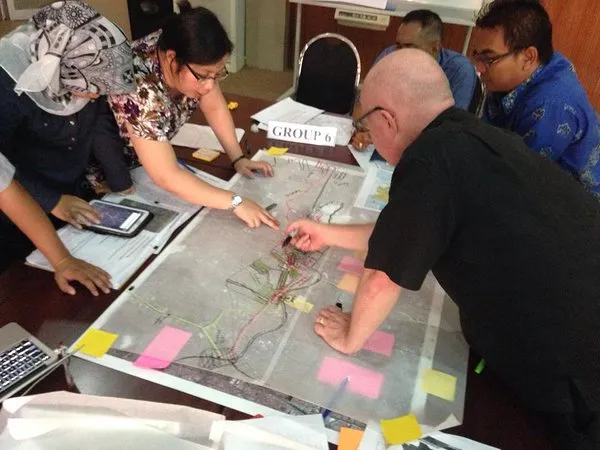
Photo: CMyrick-WMF and HGhani-WMF, CC BY-SA 4.0, via Wikimedia Commons
The Talent Map You're Using Is Out of Date
For decades, the tech industry drew its mental map of talent the same way. You hired from MIT or Caltech. You recruited at South by Southwest or Grace Hopper. You poached from Google, Meta, or maybe a hot Series B startup in San Francisco. The geography was almost as important as the résumé — because if someone was already there, in one of the right places, they'd already been vetted by proximity alone.
That map is now dangerously incomplete.
Distributed developer communities — the kind that spring up organically in cities like Eskişehir, Turkey, or Recife, Brazil, or Chengdu, China — are quietly producing technical work that rivals, and sometimes surpasses, what's coming out of the so-called innovation corridors. And most companies have absolutely no idea.
What's Actually Happening in These Communities
Let's get specific, because this isn't just feel-good rhetoric about global inclusion.
In 2021, a developer based in Lagos named Prosper Otemuyiwa had already become one of the most influential voices in the JavaScript ecosystem — a core contributor to Auth0's developer experience and a prolific open-source maintainer — long before many US companies knew to look his way. Similarly, Evan You, the creator of Vue.js (now one of the three most popular front-end frameworks on the planet), built the initial version of the framework largely outside the Silicon Valley bubble, iterating based on feedback from a globally distributed community of developers who weren't chasing VC validation.
These aren't anomalies. They're a pattern.
Groups like GDG Eskişehir exist precisely because developers in smaller cities are hungry — for knowledge, for community, for the chance to contribute to something bigger than their local job market. That hunger produces a particular kind of focus. When you don't have a ping-pong table startup culture to distract you, you tend to get really, really good at the actual craft.
The Economic Logic Behind Punching Above Your Weight
There's a structural reason why smaller tech communities produce disproportionate innovation, and it comes down to constraint economics.
Developers in major hubs are expensive, frequently job-hopping, and often working on problems defined by market forces (ad tech, fintech, SaaS tooling) rather than intellectual curiosity. Developers in distributed communities often have more time to explore, lower financial pressure to ship-and-move-on, and a stronger incentive to prove themselves through contribution rather than credential.
The open-source world has noticed. According to GitHub's annual developer report, contributions to major repositories are increasingly coming from outside the traditional US-Europe axis. Countries like Turkey, Brazil, India, and Indonesia are seeing some of the fastest growth in active contributors to projects like Kubernetes, TensorFlow, and React Native. These aren't just bug fixes — they're feature additions, architectural improvements, and documentation overhauls that shape how millions of developers use these tools.
Culturally, there's something else at play too. Developers who come up in communities without deep industry infrastructure tend to develop a scrappier, more systems-level way of thinking. They've had to build with less — fewer mentors, fewer local meetups, less access to cutting-edge hardware — and that constraint breeds creativity in ways that well-resourced environments sometimes don't.
What Companies Are Getting Wrong
The typical corporate talent strategy still relies on pipelines: university recruiting programs at a handful of schools, job boards that favor applicants in certain ZIP codes, and referral networks that perpetuate existing demographic and geographic homogeneity.
This creates a brutal irony. Companies spend millions on innovation labs and internal hackathons trying to generate breakthroughs, while the people most likely to generate those breakthroughs are out there contributing to open-source projects, building community tools, and running local developer groups — invisible to the corporate talent machine.
The companies doing it right are taking a different approach. They're sponsoring developer communities directly. They're showing up at regional tech events — not just the big conferences — and actually listening. They're creating open-source contribution pathways that serve as talent pipelines, evaluating candidates on GitHub activity and community involvement rather than just traditional credentials.
Stripe, for instance, has been notably aggressive about building engineering teams across Europe and Latin America by engaging with local developer communities rather than waiting for talent to self-select into their San Francisco orbit. The result is a product that works exceptionally well for a global customer base — because it was built by people who actually are that customer base.
Actionable Steps for Companies Ready to Look Beyond the Usual Suspects
If you're a CTO, engineering lead, or talent strategist who's read this far and is nodding along, here's where to actually start:
Audit your current sourcing channels. If every engineer you've hired in the last two years came from the same three cities or the same five universities, your pipeline has a structural problem — not a talent problem.
Engage with developer groups directly. Organizations like GDG chapters, local hackathon communities, and regional tech meetups are doing the curation work for you. The developers showing up consistently to these events are motivated, self-directed, and deeply invested in their craft. That's exactly who you want.
Make open-source contribution part of your evaluation process. A developer with a meaningful track record of contributions to a major project has demonstrated more than most technical interviews can ever surface — persistence, collaboration, code quality under public scrutiny, and genuine passion for the work.
Build relationships before you have an opening. The companies winning this game aren't posting a job req and hoping someone from Eskişehir applies. They're sponsoring local events, speaking at regional meetups, and building brand recognition in communities that most of their competitors have never visited.
The Window Is Still Open — But Not for Long
Right now, there's a genuine first-mover advantage available to companies willing to look beyond the familiar talent map. The developers in distributed communities around the world are building skills, building networks, and building reputations. Some of them will get recruited by the usual suspects eventually. Some will build their own companies.
The ones who don't get discovered early? They'll remember who showed up when it mattered.
The next breakthrough in your industry might already be in someone's GitHub repo in a city you've never thought about. The only question is whether you'll find it before your competitors do.