How to Build a Real Tech Community in a City That's Not on Anyone's Radar
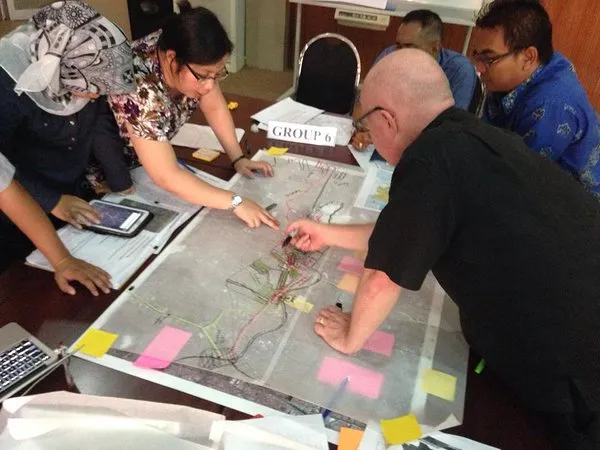
Photo: small group developers community meetup workshop city, via media.voog.com
Nobody Is Coming to Save Your Local Tech Scene
If you're sitting in Tulsa, or Boise, or Chattanooga, or any mid-sized city that doesn't show up in TechCrunch's event roundups, you've probably felt it: that quiet assumption that the good stuff happens somewhere else. The conferences, the networking, the career-defining connections — all of it seems to orbit a handful of coastal zip codes.
We felt it in Eskişehir, too.
Eskişehir is a university city in central Turkey. It's vibrant, it's smart, and it has more engineering students per capita than you might expect. But when we started building GDG Eskişehir, we weren't working from a playbook. There was no template for "how to make developers in a secondary city feel like they're at the center of something, not the edge of it."
This article is the guide we had to write for ourselves. If you're trying to build something real in a city that doesn't have a FAANG office or a famous accelerator, keep reading.
Step One: Stop Waiting for Permission
The most paralyzing myth about starting a tech community is that you need credentials, connections, or a big name behind you before anyone will show up. You don't.
What you need is a reason for people to come once — and enough follow-through to make them want to come back. That's it. The first GDG Eskişehir event wasn't polished. The slides weren't perfect. The venue was a borrowed classroom. But people came because someone they trusted said "this is worth your Tuesday night," and then it actually was.
Your first event doesn't need to be impressive. It needs to be useful. Pick one specific topic your local developer community cares about — not a broad "intro to tech" night, but something concrete. A hands-on workshop on a popular framework, a panel on breaking into remote work, a live-coding session on something people are actually building. Specific beats impressive every time.
Finding Your First Ten People (They're Already There)
Every city has a small, scattered group of developers who are hungry for exactly what you're trying to build. They're just not in the same room yet. Here's where to find them:
University CS departments are an obvious starting point, but don't just talk to students — talk to professors who moonlight as developers and instructors who teach bootcamp-style courses. They know who's motivated and who's looking for something beyond the classroom.
Local meetup platforms and Facebook groups often have dormant tech communities. Find the groups that haven't posted in six months and message the organizers. Sometimes they're relieved someone else wants to pick it up.
LinkedIn local searches are underused. Search for software engineers, developers, or designers within 25 miles of your city. You'll find people who are remote workers, freelancers, and employees of companies nobody's heard of — all of whom may be quietly craving local connection.
Coworking spaces and college coffee shops are physical hubs. Put up a flyer. It sounds old-fashioned because it is, and it still works.
Your goal at this stage isn't a hundred members. It's ten people who are genuinely excited and will bring one friend each to your next event.
Getting Sponsors Without a Big Audience to Offer
This is where a lot of would-be organizers get stuck. Sponsorship conversations feel impossible when you don't have attendance numbers to wave around. But local sponsorship is a different game than national sponsorship — and it's more winnable than you think.
Local businesses aren't looking for impressions. They're looking for relationships. A software consulting firm in your city doesn't need you to promise them a thousand eyeballs. They need to be in the room with the developers who might become their next hire or their next client.
Start hyper-local. Pitch the tech companies in your city first — even small ones. Offer them a table at your event, five minutes to talk about what they're building, and a mention in your communications. Ask for pizza and a venue, not cash. In-kind sponsorship is dramatically easier to get than a check, and it's enough to get started.
As your community grows, you can approach regional offices of larger companies, local banks with tech innovation arms, and university departments that have community engagement budgets. But you have to have a few events under your belt first. Proof of concept is your most powerful pitch.
Running Events That People Actually Want to Attend
Here's a hard truth: most developer meetups are boring. They're a series of long talks, a lukewarm pizza break, and a Q&A where nobody asks questions. Don't run that event.
The formats that consistently work for us:
Workshops over lectures. People want to leave with something they built, not just something they heard. A two-hour workshop where everyone writes code and walks away with a working project is worth ten passive presentations.
Lightning talks with real stakes. Five-minute talks from community members about what they're actually building right now — not polished keynotes, just honest updates. These surface interesting work and give newer members a low-pressure way to participate.
Problem-solving sessions. Bring a real problem someone in the community is stuck on and work on it together. These are messy and unscripted, and developers love them.
Study groups for certifications or new technologies. Ongoing, low-commitment, and they keep people coming back week after week.
Measuring Health Beyond Headcount
Attendance is a vanity metric. Fifty people who show up once and never return is not a community — it's an audience. Here's what actually tells you your community is healthy:
- Return rate. What percentage of people come to more than one event? If it's below 40%, your content or your format needs work.
- Peer connections. Are members connecting with each other outside your events? Are people forming study groups, collaborating on projects, or referring each other for jobs?
- Contribution rate. Are community members offering to speak, volunteer, or help organize? A community where only the founders do all the work isn't a community yet.
- Career outcomes. Are people getting jobs, landing clients, or leveling up professionally because of connections made in your group? These stories are your most powerful asset.
Track these things informally at first — just pay attention and ask people directly. The qualitative signals matter more than your RSVP count.
The Long Game
Building a tech community in a city that's not on anyone's radar is slow work. There will be events where only eight people show up. There will be months when it feels like you're pushing against gravity. That's normal, and it doesn't mean you're failing.
What GDG Eskişehir has learned is that the value of a local tech community isn't just in the events — it's in the ambient sense that you're not doing this alone. That there are people in your city who care about the same things, who'll share an opportunity when they see one, and who show up when you need to think through a hard problem.
That kind of community doesn't show up in any metric. But it's the whole point.
Your city needs this. Go build it.