Lost in Translation: Why Developer Docs Are Secretly Written for One Kind of Developer
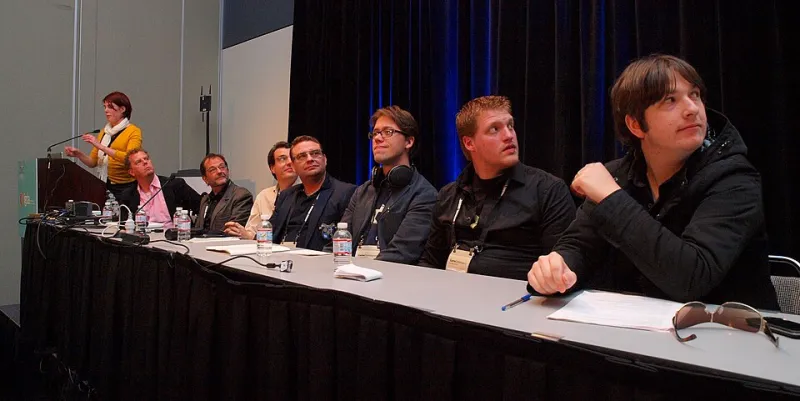
Photo: CMyrick-WMF, CC BY-SA 4.0, via Wikimedia Commons
The Code Works. The Docs Don't.
Imagine you're a developer in a mid-sized city. You're sharp, motivated, and you've just decided to integrate a popular cloud authentication library into your project. You pull up the official documentation. Step one looks fine. Step two references a billing setup that requires a credit card from a "supported country" — yours isn't on the list. Step three assumes you're running a local dev environment on hardware that costs three times your monthly salary. By step four, you've already opened three Stack Overflow tabs and sent a message to your group chat that just says "why."
This is the translation problem. And it's not really about language.
At GDG Eskişehir, we work with developers across a region of Turkey that has a thriving university scene, a growing startup ecosystem, and genuinely talented engineers who are hungry to build. But time and again, we watch people hit invisible walls — not because the technology is beyond them, but because the documentation was written by and for a very specific kind of developer who looks nothing like them.
What "Implicit Assumptions" Actually Looks Like
Let's get concrete, because this conversation often stays too abstract to be useful.
One of the most common friction points is payment infrastructure. A huge percentage of developer tools — from cloud platforms to API testing services to CI/CD pipelines — require a US-based credit card or a PayPal account tied to a country that's fully supported. The docs never mention this. They walk you through the entire setup process, let you build something, and then drop a payment wall that simply doesn't have a door for you. Developers in Turkey, India, Nigeria, Brazil, and dozens of other countries run into this constantly.
Then there's the bandwidth assumption. Documentation that says "just run npm install" or "pull this 2GB Docker image" is written with a stable, high-speed internet connection in mind. In many parts of the world — including some areas around Eskişehir — connectivity is inconsistent. Tutorials that work perfectly in a San Francisco coffee shop can take forty-five minutes or simply time out in a different context. Offline-first documentation is almost nonexistent.
Time zone and community access is another quiet culprit. Open-source communities often operate in real-time on Discord or Slack, with active hours centered on US or Western European time zones. If you're trying to get unblocked on a problem at 2 PM in Turkey, the people who could help you are asleep. The async documentation that should bridge that gap is often incomplete, outdated, or buried under five layers of GitHub issues.
And then there's plain cultural and linguistic framing. Even when documentation is technically translated, the examples, the metaphors, and the assumed context are still American. A tutorial that uses baseball analogies to explain state management isn't just mildly confusing — it signals, subtly but clearly, who the intended reader is.
Developers Are Adapting. They Shouldn't Have To.
Here's the thing: developers outside major Western tech hubs are resourceful. They find workarounds. They build proxy setups, share accounts, use VPNs, translate docs on the fly, and lean heavily on each other in local communities. In Eskişehir, our GDG meetups regularly turn into informal doc-debugging sessions where someone shares the workaround they found for a tool that technically "doesn't support" their region.
That adaptability is impressive. But it's also a massive, unnecessary tax on people who are already working harder to access the same resources their Silicon Valley counterparts take for granted. Every hour spent reverse-engineering a payment workaround is an hour not spent building something.
We've talked to developers across our community who describe a low-grade sense of being an afterthought — not unwelcome, exactly, but not considered. And that feeling accumulates. It shapes which tools people adopt, which communities they engage with, and ultimately, whether they stay in tech at all.
What Good Inclusive Documentation Actually Looks Like
This isn't a complaint without a blueprint. There are real, practical things that documentation authors, open-source maintainers, and developer relations teams can do differently.
Start with a global prerequisites check. Before any tutorial begins, be explicit about what it requires — not just technical requirements, but geographic ones. If your tool requires a US billing address, say so upfront. If it needs a high-bandwidth connection, flag it. Developers can handle bad news; what they can't handle is finding out at step seven.
Build offline or low-bandwidth alternatives into your docs. This doesn't mean rebuilding everything — it means including a section that says "if you're on a slow connection, here's a lighter path." Some of the best documentation we've seen includes explicit notes about resource-heavy steps and lighter alternatives.
Invest in async community infrastructure. Real-time chat is great, but it's not global by default. Comprehensive FAQs, searchable forum archives, and documentation that anticipates common non-US edge cases can do more for a developer in Eskişehir at 2 PM than a Discord channel that won't wake up for six hours.
Localize beyond translation. True localization means revisiting examples, use cases, and metaphors — not just running text through a translation API. It means asking whether your sample app makes sense in a context where Stripe isn't available, or where the dominant mobile platform isn't iOS.
Listen to non-Western developer communities. Groups like ours — GDGs, local meetups, university coding clubs in mid-sized cities — are sitting on a goldmine of specific, actionable feedback about where documentation fails. Reach out. We'll tell you exactly where the walls are.
Why This Matters Beyond Fairness
If the equity argument doesn't move you, here's the pragmatic one: the next generation of influential developers, open-source contributors, and technical thought leaders is not going to come exclusively from San Francisco or New York or London. It's going to come from cities like Eskişehir, Pune, Lagos, and Medellín — places with deep engineering talent and enormous appetite for building.
Documentation that excludes those developers doesn't just fail them. It fails the tools themselves. It limits adoption, shrinks contributor pools, and keeps ecosystems smaller and less diverse than they could be.
The translation problem is solvable. It just requires acknowledging that it exists in the first place — and that the default reader isn't the only reader worth writing for.