The Smartest Career Move You Haven't Made: Plugging Into Global Grassroots Tech Communities
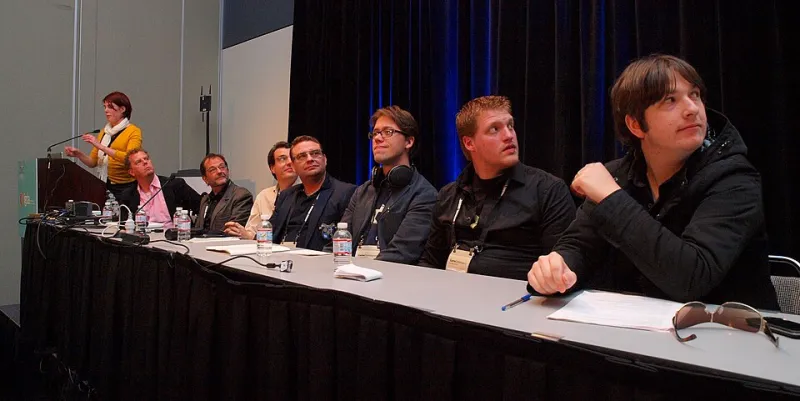
Photo: Official GDC, CC BY 2.0, via Wikimedia Commons
Let me make a prediction: in five years, the developers who built meaningful connections with grassroots tech communities outside the US are going to look back at that decision the way early LinkedIn users look back at joining in 2004. A little ahead of the curve. Quietly advantageous. Obvious in retrospect.
I'm not talking about outsourcing. I'm not talking about offshoring. I'm talking about something more interesting and more reciprocal—the kind of professional engagement that happens when American tech workers actually show up, contribute, and pay attention to what developer communities in places like Eskişehir, Turkey are building.
The US-Centric Blind Spot
American tech culture has a talent for assuming it's the center of gravity. And look—there are real reasons for that assumption. Silicon Valley shaped the modern internet. US companies built the platforms, the frameworks, the cloud infrastructure that the world runs on. The résumé-building events, the networking that moves careers, the VC relationships that turn ideas into companies—for a long time, most of that was concentrated in a few American cities.
But here's what that assumption costs you: it filters out an enormous amount of signal. When your professional network is 95% American, you're getting a remarkably narrow slice of how the global tech industry actually thinks and operates. You're missing perspectives shaped by different infrastructure constraints, different user behavior, different regulatory environments, and different cultural relationships with technology.
That's not a soft, feel-good observation. It has real consequences for the quality of the software you build, the products you design, and the career opportunities you're able to see.
What Grassroots Communities Actually Produce
Here's what tends to surprise American developers when they first engage seriously with a community like GDG Eskişehir: the technical depth.
There's a lazy assumption that developer communities in smaller cities or emerging markets are catching up to where US developers already are. The reality is more complicated and more interesting. Developers in communities like ours are often working on genuinely hard problems—building applications for markets with inconsistent connectivity, designing for users whose primary device is a mid-range Android phone, optimizing for cost constraints that American engineers rarely encounter. These aren't lesser engineering challenges. In many ways, they're harder ones.
The developers who come out of these communities tend to be resourceful in ways that are genuinely difficult to teach. They've had to build things that work under conditions that would send most US development teams back to the drawing board. That's a skill set worth knowing about—and worth knowing how to access.
The Partnership Opportunity Nobody's Talking About
Open source is the most obvious entry point here, and it's underutilized. The developers who are active in regional GDG communities are, disproportionately, also active in open-source ecosystems. They're contributing to projects, filing issues, writing documentation, and building tools that US developers use every day—often without much recognition or connection.
If you're a US developer who maintains an open-source project, or who relies heavily on one, you already have a reason to care about these communities. The people sustaining the tools you depend on are distributed across the globe, and a meaningful chunk of them are in regional tech communities that don't get much visibility in the American tech press.
Beyond open source, there's a real partnership opportunity for US developers who work in product, consulting, or entrepreneurship. The global app economy is enormous, and a lot of the most interesting unsolved problems are in markets that US-based developers don't have natural access to. A relationship with developers who are embedded in those markets—who understand the users, the infrastructure, the cultural context—is legitimately valuable. This isn't theoretical. It's the kind of thing that turns into co-founder relationships, consulting engagements, and product insights that actually move the needle.
What Engagement Actually Looks Like
Okay, so how does a developer in Denver or Austin or Seattle actually engage with a community like GDG Eskişehir? A few concrete answers:
Speak virtually. Regional GDG chapters run events year-round, and most of them are actively looking for speakers with real-world experience. A 45-minute talk on something you know well—a framework you've used in production, a career pivot you navigated, a technical problem you solved—is genuinely valuable to a developer community that doesn't have regular access to industry practitioners. The time investment is low. The impact is disproportionately high.
Participate in DevFests. Google's annual DevFest events happen in cities around the world, including Eskişehir. Many of them have virtual participation options. Attending, networking, or contributing to these events puts you in contact with a developer community that you'd otherwise have no organic reason to meet.
Engage on GitHub and Discord. The developers who are active in regional GDG communities are findable. They're on GitHub. They're in Discord servers. They're contributing to the same open-source projects you're probably already watching. Engaging genuinely—commenting on issues, reviewing PRs, participating in technical discussions—builds real relationships over time.
Mentor, don't just broadcast. The highest-value thing a US developer can offer a regional community isn't a conference talk. It's consistent, genuine mentorship. An hour a month with a developer in Eskişehir who's navigating a career decision or a technical challenge you've already been through is worth more to them than ten passive LinkedIn connections—and it'll teach you something too.
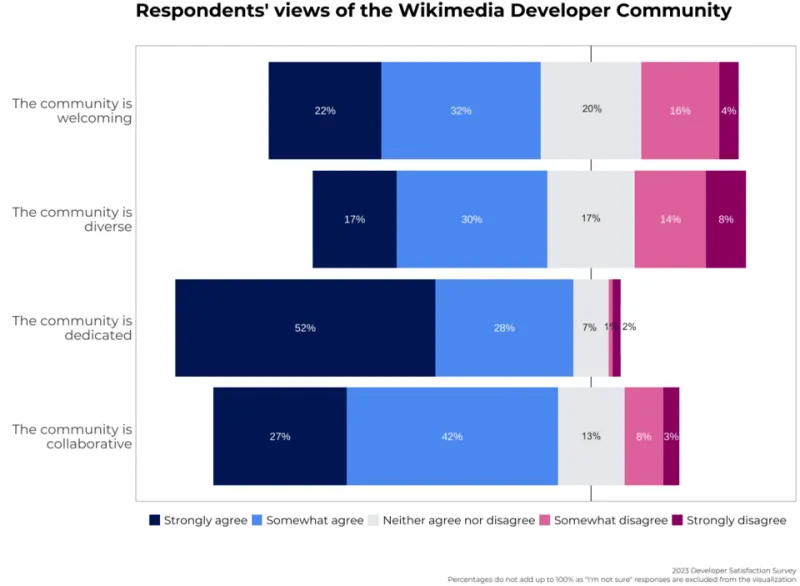
The Diversity Argument, Made Concrete
The tech industry has spent years talking about diversity in mostly demographic terms. That's an important conversation, but it's incomplete. Cognitive diversity—genuinely different ways of approaching problems, shaped by genuinely different experiences—is where the product impact actually shows up.
A team that includes developers who've built for low-bandwidth environments thinks differently about performance optimization. A team that includes developers who've navigated markets with different privacy regulations thinks differently about data architecture. A team that includes developers who've built for users with different literacy levels thinks differently about UX.
You don't get that diversity by hiring from the same five US universities and the same three bootcamps. You get it by building relationships with developer communities that are doing genuinely different work in genuinely different contexts.
The Honest Ask
We're not asking American developers to save anyone. The developer community in Eskişehir doesn't need saving—it's doing fine, growing steadily, and producing talent that the global tech industry is going to be competing for within the next decade.
What we are saying is that the relationship is more reciprocal than most US developers realize. Engaging with grassroots tech communities worldwide makes you better at your job, expands your professional network in directions that compound unexpectedly, and puts you ahead of a curve that the rest of the industry is going to catch up to eventually.
The question is whether you want to be early.