From Eskişehir to Everywhere: How Small-City Developer Groups Are Rewriting the Rules of Tech Access
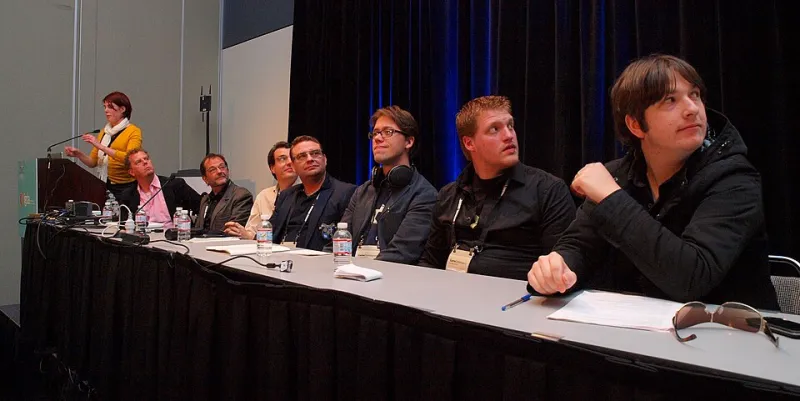
Photo: CMyrick-WMF and HGhani-WMF, CC BY-SA 4.0, via Wikimedia Commons
If you asked most American developers to name the world's top tech cities, you'd hear San Francisco, Seattle, New York, maybe Austin or Boston. Rarely does anyone mention a mid-sized Anatolian city in central Turkey. But that's precisely the point—and precisely why what's happening in Eskişehir deserves a closer look.
GDG Eskişehir, the local chapter of Google's global Developers Groups network, has been quietly doing something remarkable: turning geographic disadvantage into a community asset. And the playbook they're running offers lessons that stretch far beyond Turkey's borders.
The Geography Problem in Tech Education
Let's be honest about something the industry doesn't love to admit: access to quality tech education and professional networking has never been evenly distributed. A developer in San Jose can walk into a Google campus event, grab coffee with a staff engineer, and attend three meetups in a single week. A developer in a smaller regional city—whether that's Eskişehir, Turkey or Boise, Idaho—faces a fundamentally different landscape.
The consequences are real. Talent goes undiscovered. Innovative ideas never get the mentorship they need to scale. Developers plateau not because of skill gaps, but because of network gaps. The global tech ecosystem loses out on perspectives and contributions that never got the runway to take off.
This is the divide that GDG chapters were built to address—and regional chapters like ours in Eskişehir are where that mission gets its most serious test.
What a Regional GDG Actually Does
It's easy to think of a local developer group as just a meetup club—people gathering to watch YouTube talks and share pizza. The reality is considerably more substantive.
At GDG Eskişehir, the programming is built around closing concrete gaps. Workshops on Google Cloud, Flutter, Android development, and machine learning aren't just knowledge-sharing sessions—they're deliberate attempts to give local developers credentials and capabilities that make them competitive in a global job market. When a developer in Eskişehir completes a hands-on TensorFlow workshop that mirrors what a developer in Mountain View might attend, the geography stops mattering as much.
Then there's the network effect. Through the broader GDG ecosystem, members here connect with developers across Turkey, across Europe, and across the world. A student working on a Flutter project in Eskişehir can get feedback from a GDG organizer in Lagos or collaborate with a developer they met at a Google I/O Extended event. These connections aren't hypothetical—they happen regularly, and they compound over time.
Case Study: From Local Meetup to Global Contributor
Consider the trajectory of developers who engage seriously with regional GDG programming. Many arrive as university students or early-career engineers with solid fundamentals but limited exposure to industry-standard tools and practices. The chapter fills that gap through structured learning paths, hackathons, and speaker events that bring practitioners—not just academics—into the conversation.
What happens next is the part that rarely makes headlines. These developers start contributing to open-source projects. They build apps that solve hyperlocal problems—transportation logistics, agricultural tech, local commerce—using globally relevant frameworks. They present at regional DevFests and get comfortable articulating technical ideas to an audience. They become, in short, globally competitive engineers who happen to be based in central Turkey.
The broader tech world benefits from this. Diverse problem-solving backgrounds produce genuinely different approaches to software architecture, UX design, and systems thinking. A developer who grew up navigating infrastructure constraints thinks differently about optimization than one who's always had abundant bandwidth and cheap cloud credits. That difference is valuable—if the ecosystem creates pathways for it to show up.
The DevFest Model: Bringing the Conference to the Community
One of the most effective tools in the regional GDG toolkit is the DevFest—an annual, community-organized developer conference that runs parallel to Google's global programming. For developers in Eskişehir, attending a DevFest might be the closest thing to a major tech conference they can realistically access.
But DevFests aren't consolation prizes. The talks are technically substantive, the workshops are hands-on, and the networking is genuine. More importantly, they create a local culture of learning and professional development that persists year-round. Developers who attend don't just pick up new skills—they start identifying as part of a community, which changes how they engage with their own growth.
For organizers, running a DevFest is also a masterclass in event production, community management, and technical programming—skills that translate directly into leadership roles in the broader tech industry.
What the US Tech World Can Learn Here
Here's a reframe worth sitting with: the challenges that GDG Eskişehir navigates—limited local industry presence, distance from major tech hubs, the need to build community infrastructure from scratch—aren't unique to emerging markets. They're the same challenges facing developer communities in rural America, in mid-sized Midwestern cities, in any place that isn't a recognized tech cluster.
The strategies that work in Eskişehir work because they're fundamentally sound: meet people where they are, build programming around real skill gaps, connect local community to global networks, and create visible pathways from beginner to contributor. These aren't Turkey-specific solutions. They're community-building fundamentals that scale across contexts.
American developers and tech organizations that engage with what's happening in regional GDG chapters worldwide aren't doing charity work—they're tapping into a genuinely underutilized source of talent, perspective, and innovation energy. The developer writing better code in Eskişehir today might be the open-source maintainer you're depending on in three years.
The Compounding Effect of Community Investment
Tech ecosystems don't emerge overnight, and they don't emerge in isolation. They're built through sustained community investment—years of meetups, workshops, mentorship conversations, and collaborative projects that slowly accumulate into something larger than any individual contribution.
What GDG Eskişehir represents, in that context, is infrastructure. Not the physical kind, but the social and educational kind—the connective tissue that turns a city with talented developers into a city with a developer community. That distinction matters enormously for what's possible next.
The global developer divide isn't going to close because a few major tech companies decide to expand their offices to more cities. It's going to close because communities in places like Eskişehir keep showing up, keep building, and keep proving that geography was never a ceiling—just a starting point.