I Knew Almost Nothing. I Gave a Talk Anyway. It Got Me Hired.
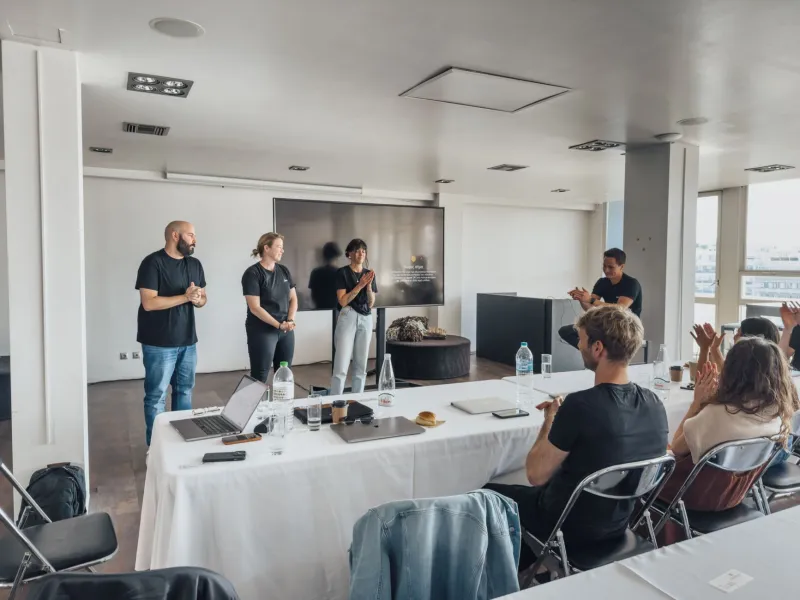
Let me paint the picture. It's March, I've been applying to junior developer roles for five months, and my rejection folder is getting its own folder. I've got a bootcamp certificate, a couple of tutorial projects, and a resume that reads exactly like the other 400 resumes in every recruiter's inbox.
Then I did something that felt mildly terrifying and completely pointless at the time: I signed up to give a 10-minute lightning talk at my local Google Developers Group meetup. The topic? How CSS Grid actually works, explained for people who, like me three months earlier, had no clue.
Nine weeks later, I had a job offer. The hiring manager mentioned the talk twice during the final interview.
The Catch-22 Nobody Solves for You
Every early-career developer in the US knows the loop: you need experience to get a job, and you need a job to get experience. So we respond the way we've been trained to — we collect credentials. Another certificate. Another course completion badge. Another LinkedIn skill endorsement from your cousin.
Here's the problem: certificates prove you sat through something. They say nothing about whether you can communicate, collaborate, or think on your feet. Employers screening junior candidates aren't really asking "does this person know React?" — they're asking "will this person be worth mentoring in six months?"
A lightning talk answers that second question in a way no PDF ever will.
Why a 10-Minute Talk Beats Another Certificate
Think about what a short community talk actually demonstrates:
- You can learn something well enough to explain it. That's literally the job. Junior devs spend their first year learning things and explaining them to seniors in standups.
- You can stand in front of strangers and be wrong gracefully. Someone asked me a question about grid auto-placement I couldn't answer. I said "great question, I don't know, I'll find out." Hiring managers love that.
- You're invested in a community. Companies know that developers who show up to meetups tend to be curious, connected, and less likely to burn out in isolation.
- You've given the interviewer a story to ask about. Half the battle in interviews is steering the conversation toward things you're good at. Now it's on your resume: "Speaker, GDG Eskişehir — 'CSS Grid in 10 Minutes.'"
One recruiter told me flat-out that seeing a community talk from a junior candidate was rarer than seeing a AWS certification, and it made the resume memorable. Rare beats credentialed.
"But I Don't Know Anything Worth Talking About"
This is the lie your imposter syndrome tells you, and it's costing you job opportunities.
You don't need expertise. You need a vantage point. The best beginner talks come from people who just struggled through something, because you remember exactly where the confusing parts are. Experts forget. You don't.
Good first-talk topics I've seen land well:
- "The five Git mistakes I made in my first month"
- "What I learned deploying my first app (and breaking it)"
- "How I finally understood recursion"
- "Reading documentation: a survival guide"
Notice the pattern? These are all "here's what I just learned" talks. Nobody expects a junior to lecture on distributed systems. They expect honesty and a little enthusiasm.
The Step-by-Step, So You Have No Excuses
1. Pick one thing you learned in the last 30 days. Small beats big. A focused topic like "async/await finally clicked for me — here's the mental model" is better than "all of JavaScript."
2. Find your local meetup and look for lightning talk slots. Most GDG chapters and similar groups openly want new speakers. Check the next event page, join the Discord or Slack, and just ask the organizer: "I'd like to do a 10-minute beginner talk — any slots coming up?" Organizers will genuinely be relieved someone volunteered.
3. Propose it in three sentences. Topic, who it's for, why you care. Example: "I'd like to give a 10-minute intro to CSS Grid aimed at beginners. I just went from totally confused to actually using it, so I remember all the confusing parts. I think it'd help other juniors."
4. Build slides as a story, not a reference. Ten minutes is roughly 6–8 slides. Problem → confusion → the moment it clicked → tiny live demo or screenshot. That's it.
5. Practice out loud exactly twice. Once to yourself, once to a friend or your bathroom mirror. More than that and you'll sound robotic.
6. Deliver it, and embrace the "I don't know." If a question stumps you, that's not failure — that's a follow-up post and a reason to come back next month.
7. Put it everywhere. Resume, LinkedIn, portfolio site. "Speaker" is a verb hiring managers don't see on junior resumes nearly enough.
Learn in Public, Get Hired in Public
There's a reason "learning in public" keeps showing up in career advice: it compounds. The talk becomes a blog post. The blog post becomes a conference proposal. The conference talk becomes a network of people who email you job openings before they're posted.
For me, it started with ten nervous minutes about CSS Grid in front of maybe thirty people, half of them eating pizza. My resume didn't change. My story did.
If you're stuck in the experience Catch-22, stop trying to buy your way out with another certificate. Find your local GDG chapter, pick something you learned last week, and go explain it to a room. Worst case, you get better at public speaking.
Best case, it's the strongest line on your resume — and the reason someone gives you your first yes.